
Short answer: KiwiSaver funds are usually grouped by how much of the fund is held in growth assets such as shares and property, versus income assets such as cash and bonds. More growth assets generally means more ups and downs along the way, and more potential for long-term growth.
Key points: the common groupings run from defensive and conservative through balanced to growth and aggressive. The right one depends mainly on how long until you need the money and how comfortable you are with your balance falling in the short term.
Worth checking: fund names are not standardised between providers - two funds called "balanced" can hold quite different mixes. Check the actual growth-asset percentage in the fund's documents rather than relying on the label. Sorted explains the categories independently.
Sources and further reading
Primary New Zealand sources for the points above. Rules change, so check the current position before acting:
- Sorted - which KiwiSaver fund suits you - independent guidance on matching a fund type to your timeframe.
- Sorted KiwiSaver fund finder - compare real funds by type, fees and returns.
- Inland Revenue - making changes to my KiwiSaver - how to change fund or provider.
- Financial Markets Authority - the regulator of KiwiSaver providers in New Zealand.
When people think about KiwiSaver, they usually picture one pot of money ticking along quietly in the background. Learn more about fund types.
But here’s the thing: not all KiwiSaver Funds are created equal.
Choosing the right Fund Type can mean the difference between coasting into retirement… or powering there with the wind at your back.
What Are the Main Fund Types?
KiwiSaver funds come in six main flavours:
Defensive, conservative, moderate, balanced, growth, aggressive. These names are consistent across all providers.
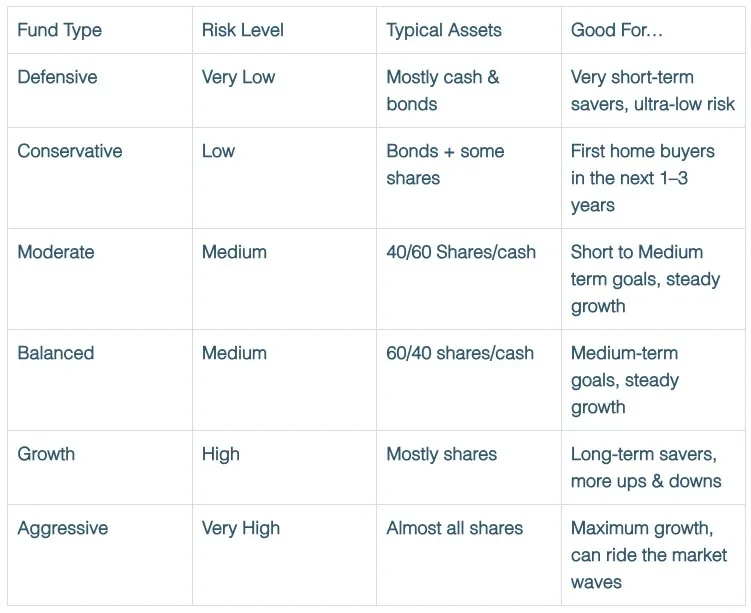
Which Fund Type Is Right for You?
It depends on three key things:
- Your goals: Are you saving for a house, retirement, or something else?
- Your time frame: When will you need the money?
- Your risk tolerance: How do you feel when the market dips?
If you’re 35 and not touching your KiwiSaver until 65, a Growth or Aggressive fund could seriously boost your balance over time
But if you’re buying your first home next year, you may want to play it safer with a Conservative fund.
Straight after you buy your first home next year, you should review your KiwiSaver; your time frame until withdrawals at retirement is probably much, much longer than before.
Most Kiwis Are in the Wrong Fund
And that’s costing them big time.
Far too many people are stuck in default or low-risk funds that don’t match their goals. That’s money being left on the table, the difference could be tens (or hundreds!) of thousands of dollars.
Don’t Guess. Get Advice.
This stuff isn’t one-size-fits-all, and it’s absolutely worth getting right.
As a KiwiSaver specialist, I can help you:
- Find the right fund type for your situation
- Maximise your KiwiSaver performance
- Feel confident that your future is sorted
Your Next Steps
Find out if you’re in the right fund type.
Book a Free 30-Minute Advice Session
Meet me one-on-one to discuss your KiwiSaver.
Simple Steps. Solid Results
Get personalised KiwiSaver advice
Free 30-40 minute session with Cam. No obligation. Online anywhere in NZ or in person across Canterbury.
Book a free session